

While international headlines understandably focus on the war, these visits offered an opportunity to observe another side of Ukraine—one that receives far less attention but may ultimately prove just as important to the country’s future.
Between the air raid alerts, there is a brighter side of Kyiv.
What stands out most is the remarkable resilience of Ukrainian society. After more than four years of full-scale war, Ukrainians continue to demonstrate extraordinary adaptability, determination, and an ability to innovate under pressure. Rather than merely enduring adversity, many sectors of society are actively transforming themselves in response to it.
Nowhere is this more visible than in the defense sector. Ukraine has emerged as a global leader in the development and deployment of advanced drone technologies and innovative battlefield solutions. The pace of innovation is striking. Continued collaboration with Western defense, intelligence, and artificial intelligence partners has the potential to further strengthen Ukraine’s capabilities while accelerating developments in early-warning systems, predictive decision-making, and other technologies that will shape the future of security.
Yet Ukraine’s story extends far beyond defense.
Despite the enormous challenges of wartime conditions, key sectors of the economy continue to function and evolve. Transportation networks remain operational, the agricultural sector continues to play a critical role in global food security, and the financial system has demonstrated impressive stability. These achievements not only support local communities but also reinforce Ukraine’s growing economic partnerships across Europe and the Global South.
Equally noteworthy is the vitality of Ukraine’s cultural and creative sectors. Innovation, entrepreneurship, and artistic expression continue to flourish, demonstrating that creativity does not disappear during times of conflict. On the contrary, it often becomes one of society’s most powerful expressions of resilience. Even seemingly ordinary indicators of normal life—from restaurants and cultural venues to golf courses—reflect a determination to preserve and improve what matters despite extraordinary circumstances.
The aviation sector offers another glimpse into Ukraine’s future. During my visit to Boryspil International Airport, I had the opportunity to meet with CEO Oleksiy Dubrevskyi and his senior management team. I was impressed by the professionalism with which business continuity has been maintained throughout the prolonged closure of Ukrainian airspace. The airport’s leadership believes that operations could be restarted within 30 days of a decision to reopen the skies for commercial and cargo traffic. Such preparedness reflects a broader national mindset: planning not only for endurance, but also for recovery. As soon as the conflict enters a sustained de-escalation phase and international air connectivity is restored, the country is expected to experience a flood of tourists, entrepreneurs, and investors.
Healthcare is another area where significant opportunities exist. Discussions with the leadership of the Ministry of Health and representatives of the Ukrainian National Cancer Institute highlighted the potential for Ukraine to become a leader in precision medicine. Nationwide implementation of personalized healthcare based on genomic sequencing could accelerate population health recovery while simultaneously modernizing the country’s healthcare infrastructure. In many respects, reconstruction provides a unique opportunity not merely to rebuild existing systems, but to leapfrog toward more advanced models of care.
Looking ahead, Ukraine’s future appears promising—not despite the challenges it faces, but in part because of the capabilities it has developed in response to them.
The foundations for long-term growth, reconstruction, and prosperity are already being laid.
The country’s innovative spirit, highly educated workforce, strategic importance, and deepening integration with European institutions position it well for decades ahead. Ukraine is not only defending its sovereignty; it is actively shaping its future.
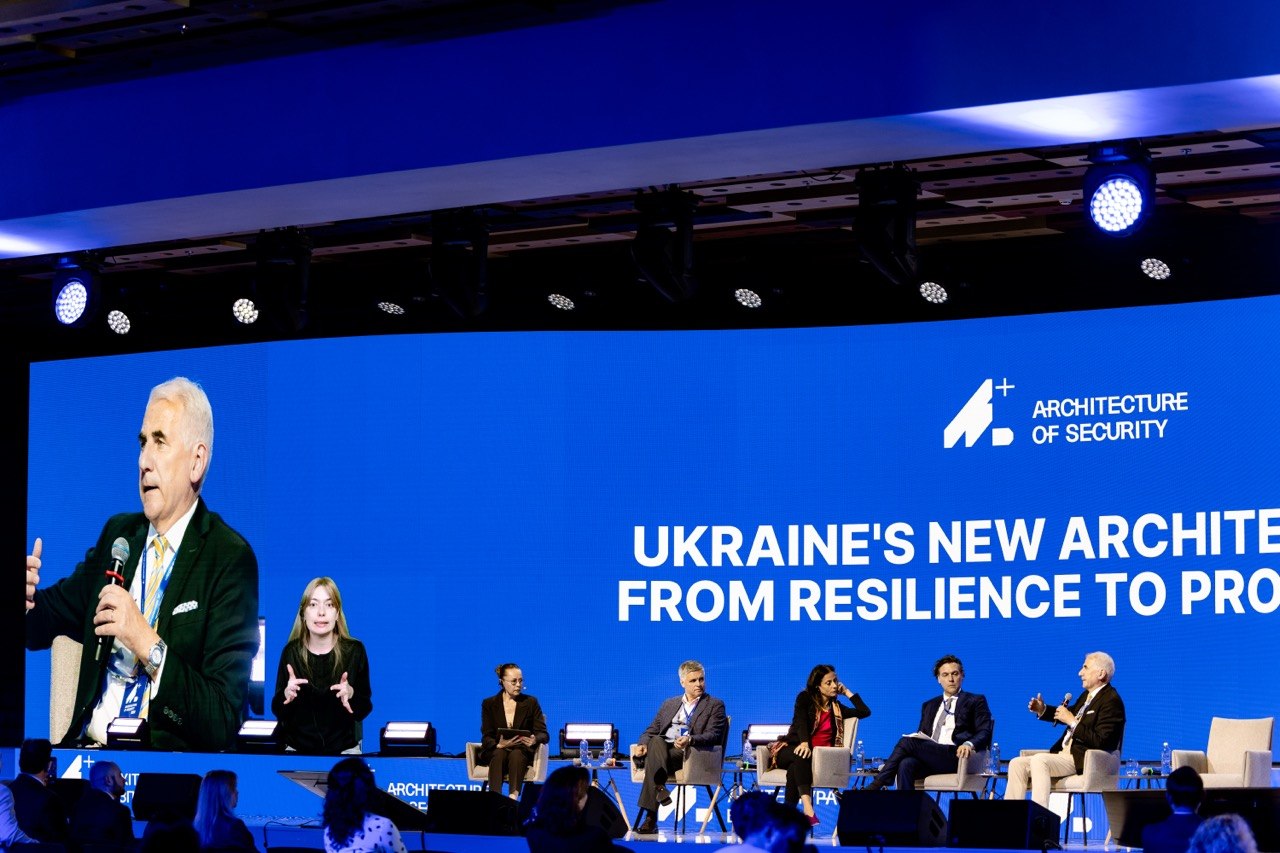
Having recently been invited by Lieutenant General Kyrylo Budanov, Head of the Office of the President of Ukraine, to serve on the Senior Advisory Board for Security Architecture Forum, I look forward to continuing my engagement with Ukraine and supporting efforts to unlock its considerable potential. My visits reinforced a conviction that many who spend time in the country come to share: Ukraine has much more to offer Europe and the transatlantic community than is often recognized from afar.
Beyond the headlines, one finds a nation that is not merely surviving but preparing for its next chapter.
Ukraine’s future is bright.
Vygaudas Ušackas, Businessmen, Member of Senior Advisory Board of Security Architecture Forum, who previously served as the Lithuanian Foreign Minister and EU ambassador to Russia